Showing posts with label Trial of Jesus. Show all posts

Monday, June 29, 2009

Again: The Titulus Crucis

Regarding the historicity of the titulus crucis[*], Raymond E. Brown states that “there is ... nothing implausible about it as a charge that a Roman governor, deciding a case according to extraordinary proceedings typical of provincial administration in a minor area like Judea, could relate to the general policy of the Lex Iulia de maiestate in the ordinary jurisprudence of Rome.”[1] To strengthen this statement of Brown, a reference should be made to the formal Roman administrative judicial procedure which was enforced early in the first-century. With this procedure being employed, only the Roman prefect or other subordinate Roman authorities on behalf of the prefect could officially condemn Jesus to death on account of a political charge that had been brought forth by the Jewish leaders.


In the provinces, only the governors, and in Egypt the prefect, had imperium and hence iurisdictio; and normally petitions,
that is, a petition or application for the case of accusing the defendant (accusatio) and confronting him/her with a trial (cognitio), would be directed to the governor or Prefectus Aegyptie. But no governor could hear all the cases directed to him, and as the result he would assign or delegate (exanapompēs) some cases to subordinate magistrates, iudices pedanei (or dati), a term rendered simply as kritai in the Greek of the eastern provinces.[2] That this official administrative judicial procedure was enforced early in the first-century, is attested by P. Oxy. 37-38 (dated to 49 CE)[3] and P. Oxy. 3464 (dated to ca. 54-60 CE).[4] We even can push its enforcement back to the reign of Augus­tus (31 BCE-14 CE), if we take into consideration the judicial process of “status examination” (epikrisis or eiskrisis) for Roman or non-Roman citizens in Roman Egypt. These examinations, sometimes conducted by the prefect or his deputies, were initiated during Augustus’ reign and were part of an administrative reorganization by the Roman government. The following comparative information concerning the Roman judicial procedure of status examination should be kept in mind.

About a hundred papyrus documents dated to the first three centuries CE record the process of status examination (epikrisis or eiskrisis) which was enforced on Roman or non-Roman citizens in Roman Egypt. Procedurally, an individual’s application for clai­ming the right to a particular status would be examined, verified and determined. If the applicant was properly qualified and his formal application was granted, the new status was then conferred and a certificate declaring the new status was issued. The official declaration of the new status of the applicant was important for, among other matters, claiming an inheritance or receiving other rights of citizenship, for example, enrollment in the military service or being wholly exempt from the poll-tax or having the right to reside in a province.

Carroll A. Nelson in his Status Declarations in Roman Egypt[5] has studied a number of such papyrus documents and analysed the form and function of such status declarations in Roman Egypt. Of the papyrus documents Nelson has analysed, some, dated from the begin­ning (103 CE) to the end of the second century (188 CE), contain records of examinations conducted directly by the prefect of Egypt or by his representatives upon Roman citizens and their dependants (slaves and freedmen) in matters such as establishing status or guaranteeing rights (pp. 40-46). Nelson, on p. 44, states, “that the prefect or his deputies conduc­ted the examinations ... means that the highest administrative office in the province handled the epikrisis of these citizens either because they were Romans or because their epikrisis involved something which was not or could not be handled on the nome [a province of ancient Egypt] or metropolis level of government.” Some of the papyri Nelson analysed (for exam­ple, P. Oxy II 257; P. Oxy X 1266; P. Oxy XII 1452; P. Oxy. XVIII 2186; PSI V 457; PSI VII 731) contain a reference to, or a citation from, a list or a documentary account dated to 4 or 5 CE (“in the thirty-fourth year of Augustus” [31 BCE-14 CE]) (pp. 28-35). Con­clusively, Nelson stresses that “In the first place, all available evidence points to these declarations and the examinations for status as exclusively Roman procedures which probably were initiated during the reign of Augustus and were part of an administrative reorganization by the Roman government” (p. 66) and “through status declarations and the records which they provided for nome and provincial officials, the Roman government was able to administer and control more efficiently her citizens and subjects in Egypt.” (p. 67).

Notes


[*] The image of the titulus crucis attached on this post is unusual. You should read the second and the third lines of the text from right to left, an unusual manner of writing in Greek and Latin. But I love it as an expression of art. In this blog, I have provided another image of the titulus crucis which is written in a normal way; to see this, click here.

[1] Brown, Death of Messiah, 2.967-68; cf. 1.717-19.


[2] Gary A. Bisbee, Pre-Decian Acts of Martyrs and Commentarii (HDR 22; Philadelp­hia: Fortress Press, 1988) 22; Peter Garnsey, “The Criminal Jurisdiction of Governors” in Journal of Roman Studies 58 (1968) 51-59; A. H. M. Jones, The Crimi­nal Courts of the Roman Republic and Principate (Oxford: Blackwell, 1972) 104; Naphta­li Lewis, “The Prefect’s Conventus: Proceedings and Procedures” in Bulletin of the American Society of Papyrologists 18 (1981) 125 [119-128].


[3] Bernard P. Grenfell and Arthur S. Hunt (eds.), The Oxyrhynchus Papyri Part I (London: Egypt Exploration Fund, Graeco-Roman Branch, 1898) 79-82; Revel A. Coles, Reports of Proceedings in Papyri (Papyrologica Bruxellensia 4; Brussels: Fondation Egyptologique Reine Elisabeth, 1966); Gary A. Bisbee, Pre-Decian Acts, 91.


[4] A. Bülow-Jacobsen and J.E.G. Whitehorne, eds., The Oxyrhynchus Papyri vol. xlix (London: Egyptian Exploration Society, 1982) 117-119; idem, The Oxyrhynchus Papyri nos. 3431-3521 (London: Egyptian Exploration Society, 1980); Gary A. Bisbee, Pre-Decian Acts, 24, 29.


[5] (American Studies in Papyrology vol. XIX; Amsterdam: Adolf M. Hakkert, 1979).


Sunday, May 31, 2009

Titulus Crucis


Di dalam kisah Markus mengenai pengadilan Yesus, muncul gelar-gelar kristologis “Mesias" atau “Kristus” dan “Anak dari Yang Terpuji” atau “Anak Allah”, dan juga gelar “Raja”; semua gelar ini, dalam pandangan sejumlah pakar, John Dominic Crossan di antaranya, adalah ciptaan penulis Injil Markus yang menyusun kisah fiktif ini berdasarkan Mazmur 2./1/

Dengan demikian, bagi Crossan, titulus pada salib Yesus (titulus crucis) yang menyebut Yesus sebagai “Raja Orang Yahudi” (Markus 15:26; Matius 27:37; Lukas 23:38), yang menurut Yohanes 19:19-20 ditulis dalam tiga bahasa (Ibrani, Latin dan Yunani), adalah bagian dari kisah fiktif tentang pengadilan Yesus. Namun, mayoritas para ahli berpendapat bahwa titulus pada salib Yesus harus dipandang sebagai suatu bukti bahwa pengadilan Yesus oleh Pontius Pilatus adalah suatu peristiwa sejarah.

Bammel, misalnya, menilai bahwa kata-kata yang dipakai pada titulus, sebagaimana dicatat dalam injil-injil, sangat mungkin autentik, dan harus dipandang sebagai sebuah bukti sejarah yang nilai dan kepentingannya hanya dapat ditentukan dalam hubungan dengan bagian-bagian lain dari kisah pengadilan Yesus./2/

Mengenai titulus, Raymond Brown menandaskan bahwa “tidak ada sesuatu pun yang tidak masuk akal mengenai titulus ini sebagai suatu tuduhan yang dijatuhkan oleh seorang gubernur Romawi yang mengaitkan tindakannya ini dengan kebijakan umum Lex Iulia de maiestate dalam yurisprudensi Roma yang biasa, ketika dia memutuskan suatu kasus berdasarkan pemeriksaan pengadilan yang umum dijalankan di suatu kawasan kecil seperti Yudea.” Brown menyimpulkan, “Saya tidak menemukan keberatan yang meyakinkan terhadap kesejarahan titulus sebagai suatu pernyataan tertulis atas tuduhan yang menjadi alasan penghukuman mati Yesus oleh orang Roma.”/3/

Untuk mempertahankan autentisitas dan historisitas titulus, Theissen dan Merz mengajukan argumen berikut: pertama, tata krama untuk menuliskan alasan suatu penghukuman pada sebilah perisai ditemukan dalam banyak dokumen (misalnya, Suetonius, Kaligula 32.2, dan Domitianus 10:1; Dio Cassius, Sejarah Roma 54, 3, 7); tetapi praktik seperti ini tidak sangat sering dilakukan sehingga terbuka kemungkinan bahwa hal ini hanya direka-reka oleh seorang narator di dalam suatu kisah tentang penghukuman mati; kedua, titulus pada salib Yesus dirumuskan dari sudut pandang Romawi sebagaimana diindikasikan oleh pemakaian sebutan “raja orang Yahudi” (Markus 15:26) ketimbang “Kristus, raja Israel” (Markus 15:32). 

Selain itu, kita tahu, hanya orang Romawi saja yang dapat mengklaim ius gladii (“hak pedang”), yakni hak untuk menggelar suatu pengadilan atas kasus-kasus hukuman mati dan untuk mengeksekusi tanpa melakukan banding kepada Kaisar (lihat Yohanes 18:31; Yosefus, Perang Yahudi 2.8.1; # 117)./4/ 

Dan, akhirnya, komunitas Kristen pasca-Paskah tentu tidak ingin merekayasa suatu tuduhan bahwa Yesus mengklaim kedudukan sebagai raja orang Yahudi mengingat tuduhan semacam ini membuka kemungkinan bagi kesalahpahaman politis dan karenanya akan menimbulkan kesulitan berat bagi mereka (bdk. Kisah Para Rasul 17.7)./5/


Catatan-catatan

/1/ J.D. Crossan, Who Killed Jesus? Exposing the Roots of Anti-Semitism in the Gospel Story of the Death of Jesus (New York: HarperCollins, 1995) 108-110; idem, The Cross That Spoke: The Origins of the Passion Narrative (New York: Harper & Row, 1988) 56-61.

/2/ Ernst Bammel, “The Titulus” in Ernst Bammel & C.F.D. Moule, Jesus and the Politics of His Day (Cambridge, etc.: Cambridge University Press, 1988 [1984]) 363f. (353-364).

/3/ R.A. Brown, The Death of the Messiah: From Gethsemane to the Grave. A Commentary on the Passion Narratives in the Four Gospels. AB. 2 vols. (New York, etc.: Doubleday, 1994) 2. 968, lihat juga 1.717-19, 725.

/4/ Lihat juga A.N. Sherwin-White, Roman Society and Roman Law in the New Testament. The Sarum Lectures 1960-1961 (Grand Rapids: Baker Book House, 1992 [1963]) 8; Brown, Death of Messiah, 1.337-338; 363-372.

/5/ Gerd Theissen and Annette Merz, The Historical Jesus: A Comprehensive Guide (ET by John Bowden; Minneapolis: Fortress Press, 1998) 458.


Friday, May 22, 2009

The Historical Pontius Pilate

One of the reasons why some scholars reject the gospel trial narratives as historical is to be found in their conclusion that the portrayal of Pontius Pilate in the gospels is not that of history but rather that of a literary figure through whom early Christians expressed their pro-Roman attitude. They are of the opinion that in the gospels Pilate is exonerated and full responsibility is placed upon the Jewish authorities for the condemnation and execution of Jesus. With this, Pilate became a friend of the early Christians, whereas the Jews became the Christians’ foes. They see the picture in the gospels of a vacillating Pilate, trying to set Jesus free, as being in sharp contradiction with that found in extrabiblical sources, such as the writings of Philo and Josephus. But, in judging those extrabiblical pictures as history, they do not consider the theological, apologetic, and rhetorical interests of each of the extrabiblical writers.

In Philo’s Legatio ad Gaium

In the recent study of Pontius Pilate by Helen K. Bond,[1] it has been convincingly shown that the portraits of Pilate in both Philo and Josephus, while doubtlessly containing a core of historical fact, were shaped significantly by each of those writers’ general theological and rhetorical aims. In his Embassy to Gaius (or Legatio ad Gaium), Philo describes how Pilate offended against the Jewish Law by setting up iconic shields in Jerusalem; by means of an embassy, the Jewish leaders appealed to the emperor Tiberius and the emperor ordered Pilate to remove the shields (§§ 299-305). Concerning the personality of Pilate, Philo wrote that Pilate “...was a man of inflexible, stubborn, and cruel disposition...” (301); and about Pilate’s deeds, Philo noted “... his venality, his violence, his thefts, his assaults, his abusive behaviour, his frequent executions of untried prisoners, and his endless savage ferocity” (302). Bond points out that this depiction of Pilate employs stereotypical language that was commonly used of those who acted against the Jewish Law, and she concludes that “the description of Pilate’s character and motivation stems largely from Philo’s political rhetoric, in which he tries to persuade Claudius not to adopt Gaius’ attitude to the Jews, and from his theology, in which the enemies of Judaism are the enemies of God and are thus portrayed extremely negatively. This ‘theologically interpreted history’ is found in other Jewish writings of the period, particularly 2 Maccabees, Esther and Judith.”[2] Bond maintains that “behind theological gloss, the historical Pilate is just visible; though Philo allowed his imagination to play a part in describing Pilate’s character, his description of the facts seems trustworthy. Pilate appears as a governor intent on showing his loyalty to the Emperor.”[3]


In Josephus’ Jewish War and Antiquities of the Jews


In the Jewish War (written ca. 75-79 CE) Josephus relates two incidents involving Pilate: one describing his introduction of iconic standards into Jerusalem (2.169-174), the other his appropriation of Temple funds to build an aqueduct in the city (2.175-177). These two events in Pilate’s governorship are used by Josephus to strengthen the foremost rhetorical aim of the Jewish War, namely, to stress that resistance against Rome is futile and that only passive acceptance of Roman rule can produce harmony amongst subject peoples. These two accounts of Josephus do display certain characteristics of Pilate: he can be insensitive towards the people, expecting them to act as do other nations and accept the symbols of Rome; yet he can be moved by a religious demonstration and show himself as averse to excessive bloodshed. Within the bureaucracy of the Roman Empire, Pilate is a governor intent on preserving Roman law and order in Judaea; in the Jewish War, therefore, Pilate is placed alongside the other relatively able governors in the early period of that area’s status as a province of the Roman Empire.[4]

In another work by Josephus, Antiquities of the Jews (written ca. 93/94 CE), there are four narratives involving Pilate. The first two of these (concerning the military standards in 18.55-59 and concerning the aqueduct in 18.60-62) are paralleled in the Jewish War (see the previous paragraph). These are followed by the execution of Jesus, “a wise man”, in 18.63-64, and an incident involving Samaritans which culminated in Pilate’s removal to Rome on the orders of Vitellius, the governor of Syria in 18.85-89. In the episode concerning the military standards, Pilate consciously and deliberately breaks the Jewish Law by introducing military standards containing an effigy of Caesar into Jerusalem, something which no previous governor had dared to do. This gave rise to a relatively quiet protest which lasted for six days by the Jewish people in Caesarea, the place of the governor’s residence. When Pilate threatened the protesters with death if they did not end their protest and leave, the people prostrated themselves, bared their throats, and declared that they would gladly welcome death rather than transgress the wise provisions of the Law. Pilate, astonished at the strength of their allegiance to the Law, immediately had the standards removed from Jerusalem and returned to Caesarea. In Josephus’ relating of this incident, the Jews are shown as demonstrating the supremacy of their ancestral religion and Pilate is shown to have had enough flexibility to rescind his orders, remove the standards and replace the troops.

In the matter of the aqueduct (Antiquities 18.60-62), according to Josephus, it was not its construction which caused offence but rather Pilate’s misuse of Temple funds, the fact that he had completely drained the available financial resources. While the aqueduct is being built -or perhaps after it was finished-the people waited for Pilate’s visit and then expressed their grievances in a riot. The governor sent some of the Roman soldiers, dressed as the Jewish people were but armed with clubs under their garments, to circulate among the crowd. When the Jews were in full torrent of abuse, the governor gave the pre-arranged signal. His soldiers, however, used excessive force indiscriminately against the people in the crowd, punishing alike both those who were rioting and those who were not, causing panic among the people. In Josephus’ picture, Pilate thus shows some reluctance to use excessive force.

Josephus’ account in Antiquities 18.85-89 relates an incident involving Pilate and the Samaritans that occurred at the end of the prefecture of Pontius Pilate (ca. 36 CE). A false prophet announced to the Samaritans that if they would go to Mount Gerizim with him, he would show them the site in which Moses had deposited the sacred vessels. In response to this announcement which they regarded as probable, a great multitude of Samaritans gathered at Tirathana with arms. When they began climbing Mount Gerizim, Pilate, perhaps apprehensive of eschatological fanaticism, had their projected route blocked by a detachment of cavalry and heavily armed infantry. There was an encounter; some Samaritans were slain, the leaders executed, and many imprisoned. According to Bond, in this incident, Pilate acted well within his rights and responsibilities as the guardian of Roman law and order in the province; this Samaritans’ religious activity would inevitably lead to an escalation of political tensions, and this a Roman governor must avert at all costs.[5]


In the Gospel of Mark


In Bond’s analysis of Pilate’s role in the trial and execution of Jesus, there is an important contribution to the character of the historical Pilate. Most commentators regard the picture of Pilate in Mark’s Gospel-that of a weak figure who is convinced of Jesus’ innocence-as central to Mark’s attempt to exculpate the Romans and make the Jews responsible for Jesus’ death; but, according to Bond, Pilate was not a tool in the hands of the chief priests and the crowd; rather it was Pilate who was in control of the whole development. Pilate recognizes the self-interest in the actions of the chief priests (“it was out of jealousy that the chief priests had handed him over”, Mark 15:10); but Pilate also recognizes that Jesus as a messianic claimant (Note his question in Mark 15:2: “Are you the king of the Jews?”) is a potential threat to stability and the social order. Nevertheless, Pilate realizes that, to try Jesus during the time of the Passover celebration could very well provoke rioting, because Jesus was popular with many of the people. Pilate himself came up with an ingenious solution: he would exchange roles with the people, asking them what should be done with Jesus, and thereby putting them into the role of judge. For the Roman government, the voice of a local population, while not sufficient to decide a trial’s verdict, was valued in determining the political feasibility of a verdict. In the current case (the trial of Jesus) if the crowd itself were to call for Jesus’ execution, then there would be much less of a likelihood that later displays of discontent against Roman harshness would occur. So, Pilate puts the people on the spot, issuing a direct challenge to their political allegiance: “Then what do you wish me to do with the man you call the King of the Jews?” (Mark 15:12).[6] This question, writes Bond, is not a sign of weakness on Pilate’s part; rather it is his testing of the allegiance of the Jewish people, his pushing them to become part of the decision, thereby implicating themselves also. It shows, therefore, the shrewdness of Pilate and his cautious judgment.

According to Bond, there are two other accounts in Josephus’ Antiquities which illustrate how Mark’s first century readers might have understood Pilate’s action in the trial and execution of Jesus. The first of these is found in Antiquities 13.288-296. The envy of the Jews, especially the Pharisees, had been aroused against the Jewish King Hyrcanus because of his successes and those of his sons. A Pharisee named Eleazar, during a feast, said that, if the king wished to be adjudged righteous, he should give up the office of highpriest and be content with governing the people. This remark provoked the other Pharisees to indignation and Hyrcanus to fury. A Sadducee, named Jonathan, persuaded Hyrcanus that all the Pharisees were of the same opinion, and advised the king that this would become clear if he were to ask them what punishment Eleazar deserved. Hyrcanus followed this advice, telling the Pharisees that “he would be convinced that the slanderous statement had not been made with their approval if they fixed a penalty commensurate with the crime” (294). The Pharisees, feeling that death was too harsh a penalty, suggested stripes and chains, and this leniency convinced Hyrcanus that the slander had been done with the Pharisees’ approval; from that time on, the king sided with the Sadducees.

The second account, Antiquities 17.149-67, concerns the famous “eagle affair” that occured in the end of the reign of Herod I (4 BCE). The king had erected over the great gate of the Temple a large golden eagle (probably a low relief stone sculpture covered with gold leaf), the “symbol of Roman control and Jewish submission”,[7] and had dedicated it to the Temple. But it was pulled down and destroyed by a number of young men, followers of Judas and Matthias, the most celebrated interpreters of the Jewish laws. No fewer than forty young men, together with their masters, were arrested. Herod summoned the Jewish officials to the amphitheatre, reminding them of how much he had done for the nation and that, furthermore, pulling down the eagle was in effect a sacrilege. “Because of his savage state and out of fear that in his fury he might avenge himself upon them, those present said that the things had been done without their consent, and it seemed to them that the perpetrators should not be exempted from punishment” (164). Since the Jewish officials had been quick to condemn those responsible for the deed, Herod dealt mildly with the officials themselves. In the parallel account in Jewish War (1.648-655), the people are summoned and ask Herod to deal only with the perpetrators of the deed.

In both these accounts, a group of people is called to pass judgement on a crime, and this is then used by the Jewish ruler to assess their complicity in the affair. Furthermore, in the second account, the Jewish officials under Herod could hardly have later complained of the king’s harshness toward those who pulled down the golden eagle since they themselves had sanctioned such treatment and were only too pleased to be able to escape their own complicity and resulting punishment. In neither of these examples is the behavior of the ruler a sign of weakness; it is rather a deliberate challenge to the allegiance of their subjects, an attempt to make them part of the decision which they then have no alternative but to accept.


Notes

[1] Helen K. Bond, Pontius Pilate in History and Interpretation. SNTSMS 100 (Cambridge: Cambridge University Press, 1998). See also: Brian C. McGing, “Pontius Pilate and the Sources” in Catholic Biblical Quarterly 53 (1991) 416-38; Harold W. Hoehner, Herod Antipas: A Contemporary of Jesus Christ (Grand Rapids, MI: Zondervan, 1980 [reprint of SNTSMS 17. Cambridge, UK: Cambridge University Press, 1972]) 172-181; cf. idem, “Why Did Pilate Hand Jesus over to Antipas?” in The Trial of Jesus. Cambridge Studies in Honour of C.F.D. Moule, ed. Ernst Bammel (SBT Second Series 13; London: SCM Press, 1970) 84-90; Peter Richardson, Herod: King of the Jews and Friend of the Romans (Columbia, South Carolina: University of South Carolina, 1996) 305ff.; Gerd Theissen, The Gospels in Context. Social and Political History in the Synoptic Tradition. ET by Linda M. Maloney (Minneapolis: Fortress Press, 1991) 174 n.21 (“Still, Agrippa I’s petition primarily represents Philo’s point of vew”), 183 n.38; Raymond E. Brown, The Death of the Messiah. From Gethsemane to the Grave. A Commentary on the Passion Narratives in the Four Gospels. AB. 2 vols (New York, etc.: Doubleday, 1994) 859, states that instead of exonerating Pilate, the gospel portrayal of Pilate intends to “show the transparent falsehood of the pretense that Jesus had threatening royal ambitions.”

[2] Helen K. Bond, Pontius Pilate, 47.

[3] Bond, Pontius Pilate, 47.

[4] Bond, Pontius Pilate, 62.

[5] Bond, Pontius Pilate, 91.

[6] Bond, Pontius Pilate, 113.

[7] Peter Richardson, Herod: King of the Jews, 15-18; John D. Crossan and Jonathan L. Reed, Excavating Jesus: Beneath the Stones, Behind the Texts (San Francisco: HarperSanFrancisco, 2001) 199-200.


Sunday, May 17, 2009

Acta Martyrum

The term “acts” (Latin: acta) is used synonymously with the Greek word hypomnēmatismoi (“recollections”) for which the more precise equivalent in Latin is commentarius (-i). Used as a legal term, it is given to the official records of Roman trials, as taken down by offical scribes. Commentarii (“trial records”, “minutes”, “memoranda”, “records of proceedings” or “protocols”) consist primarily of discourses between magistrates and defendants (or martyrs) in a courtroom.

Acta Martyrum

In his work Pre-Decian Acts of Martyrs and Commentarii, Gary A. Bisbee, employing historical methods together with source-, text-, and form-criticism, has shown that several acta paganorum (acts of the pagan martyrs) and acta Christianorum (acts of the Christian martyrs) drew upon commentarii or were actually copies of commentarii. In their extant form, acta martyrum (the inclusive term used for both types of acta just noted) divulge stages of development beginning with commentarii, official records of historical proceedings in a courtroom. A Commentarius purports to be an “historical account,” recording “the ipsissima verba of martyrs’ trials.”[1] Although the framework of a commentarius could be fictional and while the content usually shows some reworking at various stages from the primitive copies (such as the adding of overt political propaganda), fundamentally the work is an historical document. As such, some of its details can be also found in other sources, for example, in the writings of the Hellenistic Jewish philosopher Philo Judaeus (fl. 20 BCE - 40 CE).[2]

In his work on acta paganorum entitled The Acts of the Pagan Martyrs: Acta Alexandrinorum, Herbert A. Musurillo presents an analysis of the Roman martyrologies in which the historical famous protagonists, the martyrs, are portrayed as nobly defending themselves during their trials and then in facing execution.[3] The Acta Alexandrinorum, studied by Musurillo, come from the period of the first century (the reign of the emperor Claudius, 41-54 CE) to the third-century; the Acts of the Christian Martyrs (postdating the NT gospels), of the same genre as the Acta Alexandrinorum, have also been edited and commented upon by Musurillo.[4] Musurillo has chosen twenty-eight of the acts of the Christian martyrs from the second to the fourth century CE which he judges to be historically the most important and reliable, even if there are fictional elements in some of them.[5] Opposed to this judgment is that of Timothy D. Barnes who considers only nine of the acts of the Christian martyrs as authentic.[6]

From his form-critical analysis of different documents of the Acts of the Christian Martyrs, Musurillo lists the following elements as being common to the genre. First, a judicial proceeding against the martyr is carried out in a court in which witty judges do their job, bystanders show their reactions, the martyr expresses his or her faith and urges the judges to perform their duty. Second, the martyr is then imprisoned or executed, with the soldiers and gaolers treating him or her harshly. Before execution, the martyr utters a special prayer and makes some apologetic remarks, with the crowds or bystanders expressing their reactions. In this part of the work, a first-person narrative-technique is employed. Third, just before dying, the martyr claims to see a vision or some kind of miracle occurs. After the martyr’s death, it is noted that some people experienced an apparition, as if the martyr had been restored to life. Any propagandistic elements in these acts may have an anti-Roman quality[7] and/or an anti-Semitic one.[8]

Musurillo points to what he considers as obvious similarities between pagan and Christian martyr-acts: a) the use of the dramatic “protocol” style; b) the emphasis on lively verbal exchanges and aphorisms; c) the display of heroic contempt for death; d) rather long, irrelevant speeches delivered by the martyrs; and, lastly, e) the caricature of Roman officialdom. The last two elements stand out in the later and admittedly fictional Christian passiones. However, Musurillo does not postulate any interdependence; rather, he contends that “it is a fact of common experience that similar stimuli operating upon somewhat similar environments can be expected to produce somewhat similar effects.”[9]

Indeed, all the literary evidence points to the broad literary and general historical environment in which these works were produced, an environment which was also that of the authors of the NT gospels. And so Bisbee contends that the matter has to be expressed rather dialectically: “The historian cannot assume...that the genre acta Christianorum was not influenced by pagan genres, but neither should one assume... that it was.”[10] It also follows, states Bisbee, that, with regard to the gospel trial narratives, one must be open to “the possible formal influence that they may have exerted upon later acta Christianorum,” or the other way round, “...the possibility that commentarius-form exerted an influence upon the forms given to traditions regarding Jesus’ trial.”[11] In other words, authentic commentarii produced in Roman courtrooms in which actual trials had been conducted were the seedbed for any martyr-acts.


The Formal Elements of A Commentarius

As a result of form-critical analysis, a commentarius may be divided into four sections:[12]

1) Caput or kephalaion (introductory elements/formulae), comprising:
* “extract-phrase”, indicating that the record is a copy or extract from an archival original;
* name and title of the presiding magistrate;
* date formula;
* location;
* “presence-phrase”, referring to the plaintiff;
* “participants-formulae”, stating the parties involved in the case;
* “delegation-phrase”, used in two senses: first, to denote that a magistrate with imperium and iurisdictio has “delegated” a case to a subordinate magistrate; second, to refer to a delegation to a magistrate, as, e.g., a delegation from a city to a governor;
* and “ellipsis-phrase” or “phrases of the meth’ hetera type”, indicating that the copyist omitted portions of the longer account;

2) Body of the judicial proceedings containing a record of the speeches between magistrates and participants, given either in oratio recta or in oratio obliqua and/or “narrative abstract” or “summarized discourse” as a means of shortening the copy;

3) Krisis or the magistrate’s judgment which in most cases is recorded in oratio recta, direct speech, and occasionally in a summarized form or narrative abstract;

4) Concluding matters in which a certificate of accuracy is the statement most frequently found.


The Commentarius of Jesus’ Trial?


On the basis of form-critical analysis, Bisbee concludes that, in the gospel trial accounts there are no formal elements that exactly match those of the Roman commentarii or Roman official trial records. Of course this is the case, since what is contained in the Christian gospels are not Roman official records but rather Christian theological narratives.[13] If, however, it is accepted that the historical Jesus was tried by the historical Roman prefect, Pontius Pilate, then, in Bisbee’s opinion, one must assume that, “...like other trials before Roman magistrates, there would have existed a commentarius of Jesus’ trial before Pilate. Such a commentarius...would have resembled P.Oxy. 37 (49 CE), which is representative of first-century commentarius-form.”[14] Drawing on the formal elements of P.Oxy 37, and apparently following the formal elements and general sequence, as well as the main characters of the gospel trial narratives, Bisbee offers his conjecture of what the commentarius of Jesus’ trial might have been, when he writes that “The form of the commentarius of Jesus’ trial perhaps resembled the following”:[15]

From the commentarii of Pontius Pilate, governor.
The [year] of Tiberius Caesar Augustus, [month and day].
Caiaphas, high priest of the Jewish religion having accused Jesus,
a Jew, of treason, Jesus appeared before the tribunal.
Pilate: “Do you call yourself king of the Jews?”
Jesus: “As you say.”
Pilate: “Don’t you understand the severity of the charges that have been
brought against you? Do you have anything to say in your defense?”
When Jesus made no reply,
Pilate: “Since Jesus has been charged with and
found guilty of treason, he is to be scourged and taken outside the city to be crucified.”

Again, this commentarius of Jesus’ trial is only Bisbee’s speculative reconstruction; (and I find it interesting that his reconstruction seems like a slightly expanded form of the “trial record” of Jesus which is found in the original Testimonium Flavianum). It is possible of course to believe that such a commentarius never existed. On the other hand, if one believes that it can be proved that Jesus was tried before historical Roman and Jewish authorities, then a conjecture such as Bisbee’s is worthy of consideration. The extra-biblical evidence, such as P.Oxy 37 and P.Oxy 3464 (dated to ca. 54-60 CE), the judicial processes of epikrisis or eiskrisis already carried out in Roman Egypt from the time of Augustus, as well as the historicity of the original Testimonium Flavianum, make it plausible to assume that a commentarius of Jesus’ trial did once exist, even though, until now, decisive proof of this has not been found. Nevertheless, the degree of plausibility for such an assumption becomes even greater when one takes into account the situation in Judea where “...the prefect had authority to try and execute provincials and probably also citizens within his area of jurisdiction. He would presumably have a system of assizes [a meeting or meetings of a special court held by an important judge travelling from one country town to another] to which cases could be brought and receive a hearing.”[16] Finally, Musurillo has made an important point in writing that “...it may not be too rash to suppose that the Christians were inspired in their attempts to obtain and adapt the copies of the commentarii by the knowledge that this had been successfully done before." [17]


by Ioanes Rakhmat

Notes

[1] Gary A. Bisbee, Pre-Decian Acts of Martyrs and Commentarii (HDR 22; Philadelphia: Fortress Press, 1988) 16. The word “pre-Decian” contains a reference to the name Decius (Gaius Messius Quintus), the Roman emperor who ruled only two years (249-251). He assumed the additional surname Trajan to express strongly his case of promoting an aggressive frontier policy. In order to preserve the empire, he restored the state cults and persecuted Christians. However, his approach was outdated, and his reign initiated the worst period of the third century crisis. He was the one and only Roman emperor who was slain by his enemy; and this incident marked a very low point in the history of the Roman empire. See Michael Grant, The Collapse and Recovery of the Roman Empire (London/New York: Routledge, 1999) 9-10.

[2] Herbert A. Musurillo, The Acts of the Pagan Martyrs: Acta Alexandrinorum (New York: Arno Press, 1979) 259–260 (see the literature cited there).

[3] Musurillo, Acts of Pagan Martyrs.

[4] The Acts of the Christian Martyrs. Introduction, texts and translation by Herbert A. Musurillo (Oxford: Clarendon Press, 1972).

[5] Musurillo, Acts of Christian Martyrs, xiii-l.

[6] Timothy D. Barnes, “Pre-Decian Acta Martyrum”, Journal of Theological Studies 19 (1968).

[7] Musurillo, Acts of Pagan Martyrs, 256f.

[8] Musurillo, Acts of Christian Martyrs, lii -liii.

[9] Musurillo, Acts of Pagan Martyrs, 262, 247.

[10] Bisbee, Pre-Decian Acts, 13-14; Musurillo, Acts of Pagan Martyrs, 260ff.

[11] Bisbee, Pre-Decian Acts, 91.

[12] Bisbee, Pre-Decian Acts, 33-64, 171-172; Musurillo, Acts of Pagan Martyrs, 249-252.

[13] However, Bisbee (Pre-Decian Acts, 92-94) notes some remote resemblances between the commentarius-form and certain elements in the gospel trial narratives: John 18:28 resembles a caput; John 19:13-34 gives location and time; Mark 15:4 shows remote resemblance to oratio recta; the element of krisis is found in Pilate’s judgment in Mark 15:15 (pars. Matthew 27:26; Luke 23:24-25; John 19:16) though “none of these sentences is in commentarius-form.”

[14] Bisbee, Pre-Decian Acts, 91 (see p. 163 for the Greek text of P.Oxy 37).

[15] Bisbee, Pre-Decian Acts, 92 n.28.

[16] A. Lintott, Imperium Romanum: Politics and Administration (London: Routledge, 1993) 55-56.

[17] Musurillo, Acts of Pagan Martyrs, 262, 252 n.1.


Friday, December 14, 2007

Jesus According to the Testimonium Flavianum


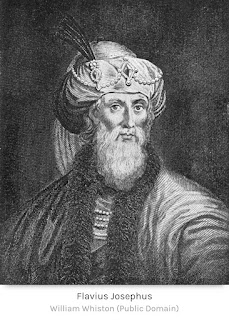
Joseph ben Matthias, the Jewish historian. Image source: worldhistory.org.


The Antiquitates Judaicae or Jewish Antiquities is a work that was completed in 93 or 94 CE by the Jewish historian Flavius Josephus (or Joseph ben Matthias)./1/

Note: The original Greek text from Josephus is no longer extant; the text available for the Antiquities is based on Greek manuscripts of the eleventh century. 

In the history of literature, chapter 18:63-64 of the Jewish Antiquities is often referred to as Testimonium Flavianum, “the Testimony of Flavius (Josephus)” to Jesus; (and in what follows it will be noted as the Testimony). 

The text of the Testimony which is quoted below is that found in Louis H. Feldman’s translation of the Jewish Antiquities./2/

“About this time there lived Jesus, a wise man, if indeed one ought to call him a man. For he was one who wrought surprising feats and was a teacher of such people as accept the truth gladly. He won over many Jews and many of the ­­­­Greeks. He was the Messiah. When Pilate, upon hearing him accused by men of the highest standing amongst us, had condemned him to be crucified, those who had in the first place come to love him did not give up their affection for him. On the third day he appeared to them restored to life, for the prophets of God had prophesied these and countless other marvelous things about him. And the tribe of the Christians, so called after him, has still to this day not disappeared.” (Antiquities 18:63-64)


The Problem of Authenticity
 

Since the sixteenth century, the authenticity of the Testimony has been widely debated. John P. Meier has distilled four positions which have emerged in this long debate:/3/ 

1) The Testimony, in its entirety, is a Christian interpolation into Josephus’ text; 
2) While there are signs of heavy Christian redaction, some mention of Jesus (perhaps a pejorative one) in the original text of the Testimony led a Christian scribe to substitute a positive, Christian text; the original wording, as a whole, has been lost, but some traces of what Josephus wrote may still be found; 
3) The text is basically what Josephus wrote; the two or three insertions by a Christian scribe can be easily isolated from the non-Christian core; 
4) In its entirety, the Testimony is exactly as it was written by Josephus. 

In the modern scholarship, the literature on this debate is enormous,/4/ but a large number of scholars judge the “basic kernel” of the Testimony to be authentic./5/ This kernel consists of everything in the above quotation, except for the words in italics which are considered to be those from a Christian interpolator./6/ 

The reasons advanced for the authenticity of the Testimony stripped of those three Christian additions are apparently exhaustive./7/ 

But, if most of the Testimony is as originally written by Josephus, the next question is whether or not that authentic material is an account of actual history. 

As an historian, Josephus most likely used certain sources, written and/or oral, and this likelihood then raises the question of the historical value of those sources. 

There is also the question of the influence of Josephus’ personal feelings when he interpreted what he accepted as history. 

Concerning this, Per Bilde, after doing a comprehensive study of Josephus’ works, maintains that “to a high degree, Josephus’ personal engagement and his personal interpretation of the historical material appears to be offset by a passionate historical interest in what actually took place.”/8/ 

Shaye J. D. Cohen is of the opinion, on the one hand, that in Josephus’ account of the events of the Jewish War (66-70 CE), he “can invent, exaggerate, over-emphasize, distort, suppress, simplify, or, occasionally, tell the truth. Often we cannot determine where one practice ends and another begins. Thus it is easy to destroy Josephus’ account, but nearly impossible to construct a more truthful one.”/9/ 

But, on the other hand, Cohen is convinced that Josephus “still retained significant echoes of the original, especially of the documentary material.”/10/ 

In harmony with this, Helen K. Bond expresses her judgment that, as long as Josephus is used with caution, he is still an historical source of unique rank and his records are “generally trustworthy.”/11/

As to the matter of Josephus’ use of a source, John P. Meier has stated that “all opinions on the question of Josephus’ source remain equally possible because they remain equally unverifiable.”/12/ 

Yet, in a recent study, G. J. Goldberg has come to the conclusion that the Testimony and the simplified or “dedramatized” version of the Emmaus narrative in the Gospel of Luke (Luke 24:19-21; 24:25-27) both have a very early Jewish-Christian source which each author used independently, with Josephus producing an interpreted historical report and Luke creating a narrative account./13/

Goldberg’s hypothesis is very instructive, for if it can be shown to contain the correct analysis, then Josephus’ references to the role of Jewish leaders in interrogating and accusing Jesus and to that of Roman authorities in passing the death sentence on him have stronger historical grounding and make more certain the existence of a pre-gospel tradition about those developments./14/

With regard to this matter of Josephus’ sources, Gerd Theissen and Annette Merz/15/ take the view that perhaps Josephus had contacts in Rome with a Christianity of the type reflected in Luke; at the same time, they note that Josephus’ roots in Palestine make it possible that he also used reports and popular traditions current in Jerusalem. 

Crossan is among those scholars who are of the opinion that “the basic kernel” of the Testimony is authentic. 

As Crossan puts it, the Testimony contains “basic historical facts”, namely that there was a movement initiated by Jesus, there was an execution because of that movement, and there was a continuation of the movement./16/

As Crossan interprets the Testimony, it is a writing which reveals how Jesus and the Jesus movement looked to Josephus, a prudent, diplomatic, and cosmopolitan Roman Jew, in the last decade of the first century. 

Josephus saw that movement as marked by miracles and teachings, conversion of Jews and Greeks, roles played by “our men of highest standing” and by Pilate, the occurrence of crucifixion, and still the movement’s continuation. 

The problem with Crossan’s interpretation however lies in the speculation he does concerning the legal basis of Jesus’ execution. 

Pilate and the “Men of the Highest Standing Amongst Us” 

In the Testimony, the words “When Pilate, upon hearing him accused by men of the highest standing amongst us (tōn prōtōn andrōn par hēmin), had condemned him to be crucified...” are considered by most scholars to be in keeping with the actual historical developments. 

However, for Crossan, these words do not point to any investigation of Jesus, even to any kind of trial of Jesus. Rather, what lies behind these words is “a standing agreement between Caiaphas and Pilate” that, during the Passover celebrations, any subversive action against the Temple or the populace would be met by immediate crucifixion of those found responsible, in the conviction that such action would be a warning and deterrent to others. Of course, it is possible that such a standing agreement was in effect. 

Still, it must be questioned whether such an agreement was indeed implied by the above-quoted words. Who were these “men of the highest standing amongst us,” and what did they do? 

Based upon Josephus’ writings and the New Testament, most probably they were, we infer, members of the ruling priestly aristocracy together with their associates,/17/ including the Pharisees who claimed to be the party of accurate and specific understanding and rigorous observance of the Torah/18/ (see Josephus: Jewish War 2. 162-3; cf. 1.108-109; Antiquities 13. 171-3; Life 191; Acts 26:5; 22:3). 

They based themselves and were active primarily in Jerusalem, but they also made periodic visits to villages and towns outside of Jerusalem/19/ (see Mark 3:22; 7:1; Matthew 15:1; Luke 15:1). 

In keeping with their role in the ordinary Judaean political processes,/21/ the Pharisees must have been consulted about the formulation of the accusations made against Jesus. In order to formulate those accusations, the Jewish leaders would have taken the initiative/21/ to hold a meeting, during which they could investigate possible criminal activities of Jesus. 

Their conclusions would then be formulated as accusations and forwarded to the Roman governor. This use of an investigative process was the same as that used by the High Priest Ananus, in the mid-60s, against James the Just, the leader of the Jerusalem community of Jewish Christians (see Acts 15:1 ff., 21:17 ff.); and this resulted in James’ execution by stoning (Antiquities 20.200)./22/

Another part of the Testimony that is most likely in harmony with actual historical developments is the picture of the involvement of the Roman governor in sentencing Jesus, on the basis of the accusations brought against him by the Jewish leaders. 

On this point, Raymond E. Brown’s note should be kept in mind: “[W]hen the Jews or their leaders had come to a decision about a prisoner, Roman independence was preserved. [A] Roman trial of Jesus conducted independently of a preceeding Jewish trial or interrogation and keeping open the possibility of release or condemnation is not implausible. There is nothing in the Gospels to suggest a mere confirmation of the Jewish sentence.”/23/

In Josephus’ account of the treatment of Jesus, son of Ananias (Jewish War 6.5.3; #300-309) who had cried out against Jerusalem and the Temple, there is another depiction of the role played by a Roman procurator (Albinus [62-64 CE]) in investigating an accused Jewish person (no Roman condemnation is included in this depiction). 

Josephus in Antiquities 20.5.4; # 115-17 tells us about the procurator Cumanus (48-52 CE) who executed a soldier for tearing up publicly a copy of the Law of Moses, blaspheming against it; the soldier was executed because he had committed a public outrage. 

Then, too, there is the statement by the Roman historian Tacitus that Pontius Pilate sentenced Jesus to die by crucifixion (Tacitus, Annals 15.44.3). 

And, we know, from the time of the Emperor Augustus (31 BCE-14 CE), the Roman prefect or his deputies in Egypt had the authority to conduct judicial processes of “status examination” on both Roman and non-Roman citizens./24/

In sum, therefore, we have evidence to conclude that, in the first century CE, a Roman governor or prefect could play a determining role in a judicial procedure ― investigation and/or trial ― of an ordinary citizen or non-citizen./25/

And this means that, in the case of Jesus, there is no need to postulate a standing agreement between Caiaphas and Pilate that would cause Jesus’ immediate execution without some investigation or trial. 

Josephus’ Testimony is actually very clear: Jesus was put to death by crucifixion, and before his execution there was some kind of interrogation and trial carried out by Jewish leaders and the Roman governor, Pontius Pilate. 

Notes 

/1/ Josephus lived from 37/38 until sometime after 100 CE, and came from a priestly family in the Jerusalem aristocracy. 

/2/ Josephus: Jewish Antiquities, Book XVIII-XX, translated (based on eclectic Greek texts, the earliest one dates from the eleventh century), edited and annotated by Louis H. Feldman (Cambridge, Massachusetts/London: Harvard Univ. Press/William Heinemann, 1969 [19651]) 48-51, in LCL 9 (9 vols; translated, edited and annotated by Henry St. John Thackeray, Ralph Marcus, Allen Wikgren and Louis H. Feldman); 

See Louis. H. Feldman, “Flavius Josephus Revisited: the Man, His Writings, and His Significance”, Aufstieg und Niedergang der römischen Welt (ANRW) II. 21.2, ed. W. Haase & H. Temporini (Berlin/New York: de Gruyter, 1984) 763-862. 

/3/ See John P. Meier, A Marginal Jew, 1.56-69, 70-88, esp. p. 59; “Jesus in Josephus: A Modest Proposal”, Catholic Biblical Quarterly 52 (1990) 76-103, esp. 81f.; cf. Zvi Baras, “Testimonium Flavianum: The State of Recent Scholarship”, in Michael Avi-Yonah and Zvi Baras (eds), Society and Religion in the Second Temple Period (London: W.H. Allen, 1977) 303-13, 378-85; idem, “The Testimonium Flavianum and the Martyrdom of James” in Louis H. Feldman and Gohei Hata (eds.), Josephus, Judaism and Christianity (Leiden: E.J. Brill, 1987) 338-348, esp. 339; Steve Mason, Josephus and the New Testament (Peabody, Massachusetts: Hendrickson, 1992) 163-175. 

/4/ In Feldman’s lists of modern scholarship (1937-1980): 83 studies on the Testimony in general; 11 studies on the Testimony’s references to Jesus; 1 study on Josephus’ sources for the Testimony; 14 studies on the phrase “He was the Messiah”; 5 studies on Origen and Eusebius in relation to the Testimony; 7 studies on the context of the Testimony; 10 studies on the language of the Testimony; 3 studies on Jesus’ appearance according to the reconstructed original Testimony; 17 studies on the Arabic and Syriac versions of the Testimony — in totality 156 studies. 

See his work Josephus and Modern Scholarship (1937-1980) (general editorship of Wolfgang Haase, Tübingen) (Berlin/New York: Walter de Gruyter, 1984) 679ff. 

And in Josephus. A Supplementary Bibliography (New York/ London: Carland Publishing, 1986), Feldman compiles 120 studies on the Testimony. 

See also Paul Winter’s bibliography on the pro’s and con’s put forth by scholars regarding the authenticity of the Testimony in his “Josephus on Jesus and James Antiquities xviii 3, 3 (63-64) and xx 9, 1 (200-3),” in Emil Schürer, The History of the Jewish People in the Age of Jesus Christ (175 B.C.- A.D. 135) (a new English version revised and edited by Geza Vermes and Fergus Millar; Edinburgh: T. &T. Clark, 1973), Excursus II, 1. 428-41. 

/5/ Louis H. Feldman, Josephus. Jewish Antiquities, Book XVIII-XX, LCL, IX, p. 49 n.b; “The Testimonium Flavianum: The State of the Question”, in R. F. Berkey and S.A. Edwards (eds.), Christological Perspectives (H.K. McArthur Festschrift; New York: Pilgrim, 1982) 179-199, 288-293, esp. 181, 199; Josephus and Modern Scholarship, 690; “A Selective Critical Bibliography of Josephus” in Louis H. Feldman and Gohei Hata (eds.), Josephus, the Bible and History (Leiden: E.J. Brill, 1989) 330-347; “Flavius Josephus Revisited”, 822.

See also Paul Winter, “Josephus on Jesus and James”, 1. 428-41; On the Trial of Jesus (rev. and ed. T.A. Burkill and Geza Vermes; Berlin/New York: Walter de Gruyter, 19742) 40; S.G.F. Brandon, Jesus and the Zealots: A Study of the Political Factor in Primitive Christianity (Manchester: Manchester University Press, 1967) 359-64; The Trial of Jesus of Nazareth (London: B.T. Batsford, 1968) 151 ff; Zvi Baras, “Testimonium Flavianum: The State of Recent Scholarship”, 303-13, 378-85.

Additionally, see also James H. Charlesworth, Jesus Within Judaism (New York, etc.: Doubleday, 1988) 90-98; Crossan, Cross That Spoke, 93-94; Historical Jesus, 372-74; Jesus, 161-63, 197; Who Killed Jesus?, 5, 147, 208f; Meier, A Marginal Jew, pp. 56-88; “Jesus in Josephus”, 87; Steve Mason, Josephus and the New Testament, 173-74; E.P. Sanders, The Historical Figure of Jesus (London, etc.: Allen Lane Penguin Press, 1993) 50, 298n.3; Raymond E. Brown, Death of Messiah, 1. 373-76; Craig A. Evans, Jesus and His Contemporaries: Comparative Studies (Leiden, etc.: Brill, 1995) 42-45; idem, “Jesus in Non-Christian Sources”, in Bruce Chilton and Craig A. Evans (eds.), Studying the Historical Jesus: Evaluations of the State of Current Research (Leiden, etc.: Brill, 1998) 443-78, esp. 466-77. 

/6/ A Major argument that the words printed in italics are later Christian interpolations, is that all are “obviously Christian” and “interrupt the flow of what is otherwise a concise text carefully written in a fairly neutral — or even purposely ambiguous — tone”; see John P. Meier, A Marginal Jew, 1. 60-62; “Jesus in Josephus”, 85, 87. 

/7/ Summary of the principle arguments either for authenticity or against genuineness can be found in the sources cited above. 

See also Brown, Death of Messiah, 1. 374, and Meier’s arguments drawn from the text’s history, context, language, and christological content in A Marginal Jew, 1. 62-69; idem, “Jesus in Josephus”, 88f. 

See also Theissen and Merz’s discussion in The Historical Jesus: A Comprehensive Guide (Minneapolis: Fortress Press, 1998; trans. John Bowden from the German Der historische Jesus: Ein Lehrbuch, 1996) 64-74. 

Four reasons have been put forward for the authenticity of the Testimony: 

(1) The Greek text of the Testimony is found in all the surviving mss. of the antiquities and was cited with some variations in the early fourth century by Eusebius in his three works, firstly in Demonstratio Evangelica 3.5.124-25, secondly in Historia Ecclessiastica 1.9.3.; 1.11.7-8, and thirdly in Theophania which survives only in a Syriac translation. Some form of the Testimony may have been known in the early third century by Origen, who dealt with the fact that though Josephus mentioned Jesus he did not believe that he was the Messiah (see Contra Celsum 1.47; also Comm. in Matt. 10.17 on ­­­­­­­­13:55 [GCS 40.22]); 

(2) Minus Christian additions, the style of writing and a great deal of the vocabularies of the Testimony are Josephan; concerning Jesus the authentic Testimony reflects a “low christology” (He is sophos anēr, “a wise man”) in contrast to, for example, “high christology” of the third and fourth centuries which claimed divine sonship for Jesus; its literary context is in agreement with the whole context of Josephus’ reporting of the heightening tension between the Jews and Rome. 

A clear tendency of the canonical gospels to exculpate Pilate and to put all the blame and responsibility upon the Jews and their leaders does not cohere with the role given to them in the Testimony. 

Furthermore, outside the Testimony, there is no evidence in the first-century for any reference to Christians as “tribe” or “clan” (for genuine Josephus’ usage, see Jewish War 3.8.3; # 354: “the tribe of the Jews”); moreover, something dismissive if not hostile can be detected in the whole sentence in which this reference appears (that is, “to this day the tribe of Christians ... has not died out”) which was aimed at Christians of his own day most likely not by a Christian interpolator but by Josephus himself (see, e.g., Meier, A Marginal Jew, 1. 66; “Jesus in Josephus”, 95f.); 

(3) Josephus’ reference to Jesus in Antiquities 20.200 needs an earlier mention of Jesus to make intelligible the reference at this point; 

(4) An Arabic version of the account from the tenth-century preserved by Agapius contains little or no sign of Christian additions. One recent article advancing arguments against authenticity of the entire Testimony is K.A. Olson’s, “Eusebius and the Testimonium Flavianum”, Catholic Biblical Quarterly 61 (1999) 305-322. Comparing the Testimony to the works of Eusebius, Olson contends that the text was created by Eusebius himself to refute pagan attacks on Jesus’ character. 

Olson states that the text contains words or phrases peculiar to Eusebius, except for two phrases which are more typical of Josephus, i.e., “receive with pleasure” (hēdonē[i] talēthē dechomenōn) and “first men” (prōtōn andrōn); these were brought into the text by Eusebius when revising his earlier version (in Dem. Evangelica 3.5. 124-125) so as to make it more in keeping with Josephus, the result being the text which now stands in his Historia Ecclessiastica. A Christian scribe then took it from the Historia and inserted it into Josephus’ account of Pilate’s administration. 

I find out that Olson’s argument inconclusive on two grounds. 

First, it is not only the two phrases just-mentioned which belong to Josephus; rather, a good number of words or phrases which Olson claims as Eusebius’ actually come from Josephus. This fact should force us to be open also to the possible authenticity of certain parts of the Testimony. 

Second, if Olson is correct in claiming that Eusebius inserted only the two phrases peculiar to Josephus into his revision of the Testimony, whereas the remaining words and phrases are his own, it follows that Eusebius knew the Josephan vocabularies quite well. 

And, if so, why did he not compose the entire Testimony in harmony with Josephus’ vocabularies, either to convince his readers of the authenticity of the account or to hinder him from revising it? 

Also, why did Eusebius feel the need to add those two phrases only later? And why did Eusebius introduce his own phrase, “wise man”, but then qualify it by introducing another of his own phrases: “if indeed one should call him a man”? 

In so doing, is it not evident that Eusebius well knew that the phrase “wise man,” applied to Jesus, was Josephan? 

Is it not possible that Eusebius had the original text of the Testimony at his disposal, but considered it unfriendly or hostile to Jesus so that he felt urged to revise it by interpolating Christian confession into it, to make it usable in his polemic against non-Christians? 

In short, could not this problem simply point to the complicated history of the transmission of the original Josephus’ Testimony, and not to the creative and editorial hand of Eusebius? 

/8/ Per Bilde also states that “No one can be in doubt that in a great many respects Josephus did not write merely to record history. 

Nevertheless, at the same time he claims as a historian he is primarily guided by regard for the historical truth. 

He maintains that the writer of history must not allow himself to be led by a desire to please and flatter; nor by a wish to excel in rhetorical style. 

Above all, the historian should remain impartial and suppress his own personal emotions. He should write soberly and objectively about the events he himself has experienced or which he has found well documented in historical sources.” 

According to Bilde, Josephus displays these principles in his prefaces to Jewish War (1.1-16) and Antiquities (1.1-4), but also in several other places, such as Jewish War 5.20; Antiquities 16.183-187; 20.154-156; Life 336-339, 357-367; Apion 1.1-56. 

Bilde comments that “(in Jewish War) Josephus’ intention is to represent the facts,... but at the same time... he wants to express his own emotions on what took place; he writes with grief for the misfortunes of the Jewish people, while at the same time, he endeavours to write accurately, painstakingly and impartially.” 

See his work Flavius Josephus Between Jerusalem and Rome: His Life, His Works and their Importance (Sheffield: Sheffield Academic Press, 1988) 73, 192-95, 200. 

Yet, unbelievably, regarding the historical value of the Testimony, Bilde is of the negative opinion that “as such (the Testimony) was indeed looked upon and celebrated for centuries, but more recent investigations have shown that, at best, the text is partly genuine and most likely a thoroughly secondary Christian fabrication. Hence, we can disregard this text with good conscience” (pp. 222-23). 

/9/ Shaye J. D. Cohen, Josephus in Galilee and Rome. His Vita and Development as a Historian (Leiden: E.J. Brill, 1979) 181. 

/10/ Shaye J. D. Cohen, Josephus in Galilee and Rome, p. 47. 

/11/ Helen K. Bond, “New Currents in Josephus Research” in Currents in Research: Biblical Studies 8 (2000) 177f. [162-190]. 

/12/ Meier, A Marginal Jew, pp. 68, 64f ; “Jesus in Josephus”, 98, 94. 

/13/ G. J. Goldberg, “The Coincidences of the Emmaus Narrative of Luke and the Testimonium of Josephus”, Journal for the Study of the Pseudepigrapha 13 (1995) 59-77; idem, “The Josephus-Luke Connection” in The Flavius Josephus Home Page (http://members.aol.com/fljosephus/LUKECH.htm); idem, “Testimonium-Luke Comparison Table”; “Statistical Significance of the Testimonium-Luke Correspondences. Comparison with Other Early Jesus Descriptions”, “Quantitative Content Analysis of Jesus Texts”, “Content Analysis of Jesus Texts. Pairwise Analysis” (all in the same Home Page). 

/14/ Moreover, the fact that Luke 24 lacks the reference to Pilate’s role may permit one to suggest that Josephus’ Testimony could be closer to that early Jewish-Christian common source. 

/15/ Gerd Theissen and Annette Merz, Historical Jesus, 74 [64-74]. 

/16/ Jesus, 162-63, 197; Who Killed Jesus?, 5f. 

/17/ See Paul Winter, On The Trial of Jesus, p. 40 n.26, referring to Antiquities 20.251; Craig A. Evans, “Jesus in Non-Christian Sources” in Studying the Historical Jesus, 472-73; idem, “Authenticating the Activities of Jesus”, in Bruce Chilton and Craig A. Evans (eds.), Authenticating the Activities of Jesus (Leiden, etc.: Brill, 1999) 3-29, esp. 17-20. 

Although the central figure was the High Priest himself, the Jewish aristocracy, through which Roman rule worked (see Antiquities 20.251), included other officers of the Temple, the leading members of the high priestly families who were also members of the Sanhedrin, and certain relatives or descendants of Herod who played an influential role in Judaean affairs even though they did not occupy any formal office. 

The core of the Jewish aristocracy, however, was composed of a few wealthy priestly families. The nineteen or so occupants of the High Priestly office between 6 and 66 CE were from only four highly influential families, who must have formed a fairly tight-knit clique in their control of Judean (and other Jewish) affairs. See Richard A. Horsley, “High Priests and the Politics of Roman Palestine. A Contextual Analysis of the Evidence in Josephus” in Journal for the Study of Judaism XVII/1, June 1986, 30-34 [23-55]; Emil Schürer, History of the Jewish People, 2.235-236; Joachim Jeremias, Jerusalem in the Time of Jesus (Philadelphia: Fortress, 1969) 147-182. 

/18/ The Pharisees’ self-understanding can be inferred from their name as pārôšîm which, they maintained, meant “the speci­­fiers”, namely, ones of “the party of accurate and specific observance of the law”; see A.I. Baumgarten, “The Name of the Pharisees”, Journal of Biblical Literature 102/3 (1983) 420, 426 ff. [411-428]. 

/19/ Richard A. Horsley, Archaeology, History, and Society in Galilee. The Social Context of Jesus and the Rabbis (Pennsylvania: Trinity Press International, 1996) 152-3; Martin Goodman, The Ruling Class of Judaea. The Origins of the Jewish Revolt against Rome A.D. 66-70 (Cambridge: Cambridge University Press, 1987, repr. 1988) 73; G. Vermes, Jesus and the World of Judaism (London: SCM Press, 1983) 31, 153 n.8. 

Though there remains no evidence outside the Christian gospels about the activities of the Pharisees as representatives of the Jerusalem authorities in Galilee during the early first century (except Josephus’ Life 196-97, the one and only mention in the whole of Josephus’ work, about three Pharisees and another delegation visiting Galilee, dispatched from Jerusalem, to effect his dismissal from the post of regional commander-in-chief), Horsley accepts the historical credibility of those Christian records: 

“Given the institutional political-economic-religious structure in first-century Palestine, if there was any representation of Jerusalem interests in Galilee, scribal retainers of the temple-state such as the Pharisees would have been the obvious candidates”. See Horsley, Archaeology, History, and Society in Galilee, 31, 33f. 

/20/ See also R. A. Horsley and John S. Hanson, Bandits, Prophets, and Messiahs: Popular Movements at the Time of Jesus (Minneapolis, etc.: Winston Press, 1985) 153, 157-59 [reviewed by T.L. Donaldson, “Rural Bandits, City Mobs and the Zealots”, Journal for the Study of Judaism in the Persian, Hellenistic and Roman Period 21 (1990) 19-40]; Martin Goodman, The Ruling Class of Judaea, 73f., 84, 150; Urban C. Von Wahlde, “The Relationship Between Pharisees and Chief Priests: Some Observations on the Texts in Matthew, John and Josephus”, New Testament Studies 42/4 (1996) 506-22. 

It should be remembered that “ordinary Judeans did not necessarily share the views of the Pharisees and often came into conflict with the priestly aristocracy” and that “it is highly doubtful that the high priesthood or its scribal ‘retainers’ (including the Pharisees) would have been able to mount a program by which the Galileans could have been effectively ‘resocialized’ into habitual loyalty to the Temple and the Torah (or the ‘laws of the Judeans’)” and that “the opposition between Jesus and the Pharisees is another aspect of the conflictual relations between Jerusalem rulers and the Galilean villagers”; see Horsley, Archaeology, History, and Society in Galilee, 182f. 

In the NT, in the references to the make-up of the Sanhedrin as “the priests, the elders, and the scribes”, there may have been Pharisees among the last-mentioned group, although the gospels do not stress it. The synoptic joining of scribes and Pharisees (some fifteen times) certainly gives this impression; in addition, there is mention in Matt. 27:62 of the Pharisees who together with the chief priests gathered before Pilate after the execution of Jesus; and in John 11:47 and Acts 5:34; 23:6 mention is made of the Pharisees as part of the Sanhedrin. See Brown, Death of Messiah, 340 n.26, 352 nn.52,53, and Appendix V, B2. 

/21/ Craig A. Evans, “Jesus in Non-Christian Sources” in Bruce Chilton and Craig A. Evans (eds.), Studying the Historical Jesus: Evaluations of the State of Current Research (Leiden, etc.: Brill, 1998), pp. 443-78, esp. p. 477. 

/22/ Antiquities 20.200-202. As has been noted, the story is placed within the context of political events in Judaea in the mid-60s. The Roman governor, Porcius Festus, has died in office (62 CE), and the emperor Nero sends Albinus to replace him (62-64 CE). 

Having been granted control over the high priesthood by the Roman authorities, King Agrippa II bestows this priestly office on Ananus II. 

However, in the eyes of Josephus, the High Priest Ananus is not different from other Sadducees who “are savage beyond all (other) Jews” (Antiquities 20:199). 

To illustrate Ananus’ impetuous conduct, including atrocities, in Antiquities 20:203 Josephus relates how, having been convinced by a delegation that had come to him, the new governor, Albinus, became infuriated at Ananus’ improper action in bypassing the Roman governor’s approval which was necessary for convening the Sanhedrin and for passing the death sentence; and Albinus then wrote to Ananus, threatening punishment for this affront to the power of the Roman governor. However, King Agrippa steps in, and deposes Ananus from the high priesthood after only three months in office. 

/23/ Brown, Death of Messiah, 1. 715. 

/24/ About a hundred papyrus documents dated to the first three centuries CE record the process of status examination (epikrisis or eiskrisis) which was enforced on Roman or non-Roman citizens in Roman Egypt. 

Procedurally, an individual’s application for clai­ming the right to a particular status would be examined, verified and determined. If the applicant was properly qualified and his formal application was granted, the new status was then conferred and a certificate declaring the new status was issued. 

The official declaration of the new status of the applicant was important for, among other matters, claiming an inheritance or receiving other rights of citizenship, for example, enrollment in the military service or being wholly exempt from the poll-tax or having the right to reside in a province. 

Carroll A. Nelson in his Status Declarations in Roman Egypt (American Studies in Papyrology vol. XIX; Amsterdam: Adolf M. Hakkert, 1979) has studied a number of such papyrus documents and analysed the form and function of such status declarations in Roman Egypt. 

Of the papyrus documents Nelson has analysed, some, dated from the begin­ning (103 CE) to the end of the second century (188 CE), contain records of examinations directly by the prefect of Egypt or by his representatives upon Roman citizens and their dependents (slaves and freedmen) in matters such as establishing status or guaranteeing rights (pp. 40-46). 

Nelson states, “that the prefect or his deputies conduc­ted the examinations... means that the highest administrative office in the province handled the epikrisis of these citizens either because they were Romans or because their epikrisis involved something which was not or could not be handled on the nome [a province of ancient Egypt] or metropolis level of government.” (p. 44). 

Some of the papyri Nelson analysed (for exam­ple, P. Oxy II 257; P. Oxy X 1266; P. Oxy XII 1452; P. Oxy. XVIII 2186; PSI V 457; PSI VII 731) contain a reference to, or a citation from, a list or a documentary account dated to 4 or 5 CE (“in the thirty-fourth year of Augustus” [31 BCE - 14 CE]) (pp. 28-35). 

Con­clusively, Nelson stresses that “In the first place, all available evidence points to these declarations and the examinations for status as exclusively Roman procedures which probably were initiated during the reign of Augustus and were part of an administrative reorganization by the Roman government” (p. 66) and “through status declarations and the records which they provided for nome and provincial officials, the Roman government was able to administer and control more efficiently her citizens and subjects in Egypt.” (p. 67). 

/25/ Raymond Brown (Death of Messiah, 1.719) cautions that it would be wrong to imagine that the governor consulted law books every time he had to deal with a provincial accused of a crime. However, one can justifiably imagine that what governed the treatment of a noncitizen such as Jesus was not a specific law, but a general principle of maintaining order in a subject province.